Terpene Benefits: What These Aromatic Compounds Actually Do
What terpene benefits really are - the aroma, the science, and why real cannabis-derived terpenes are nothing like a botanical imitation.

Terpene Benefits: What These Aromatic Compounds Actually Do
Before you taste a strain, you smell it. That first hit of citrus, pine, diesel or sweet berry isn't an accident - it's terpenes at work. These aromatic compounds are the reason two plants with near-identical cannabinoid content can feel completely different, and they're the quiet force behind almost every flavour and scent in the botanical world. This guide breaks down what terpene benefits really are, which terpenes do what, and why the source of your terpenes matters more than most people realise.
A quick refresher: what terpenes are
Terpenes are the volatile aromatic molecules plants produce to attract pollinators, deter pests and protect themselves from stress. They exist in citrus rind, pine resin, lavender, hops, black pepper - and, of course, in cannabis, where more than a hundred distinct terpenes have been identified. On their own they carry no cannabinoids and won't get you high; their job is aroma, flavour and character.
If you want the full breakdown of the chemistry and where terpenes sit in the plant, start with our companion piece: What Are Terpenes? This article picks up from there and focuses on what they actually bring to the experience.
Why the source of your terpenes changes everything
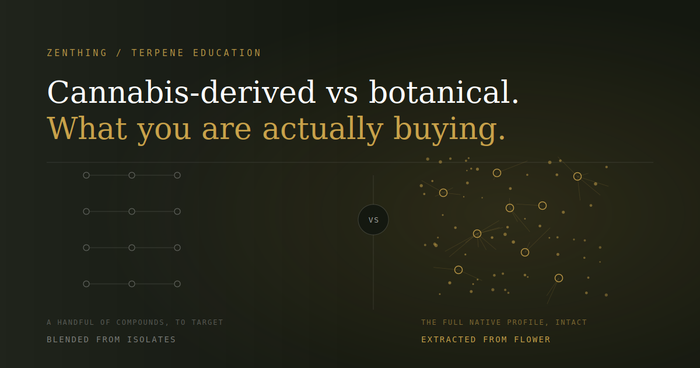
Here's the part most retailers gloss over. The vast majority of "cannabis terpenes" sold in Europe aren't from cannabis at all - they're botanical blends reconstructed from citrus, herbs and other plants to approximate a strain's profile. They can smell close, but they're an imitation of the real thing.
Cannabis-derived terpenes (CDTs) are extracted directly from the flower, so they carry the full, native aromatic fingerprint of the strain - the subtle secondary notes and the exact ratios that a botanical reconstruction simply can't copy. Every Zenthing CDT is sourced from real Oregon flower extraction, and every batch is backed by a live lab report you can read yourself on our Certificate of Analysis page. If a terpene benefit is worth chasing, it's worth chasing in its authentic form.
Common terpenes and what they're known for
Different terpenes carry different reputations. It's worth being precise here: the aroma and flavour effects are well established, while the wellness associations below come largely from traditional use and early research rather than settled clinical fact. Treat them as a map of what each terpene is commonly associated with, not medical advice.
| Terpene | Aroma | Also found in | Commonly associated with |
|---|---|---|---|
| Myrcene | Earthy, musky, clove-like | Mango, hops, lemongrass | A heavy, relaxed, "settle-in" character |
| Limonene | Bright citrus | Citrus peel, juniper | Uplift and a brighter mood |
| Pinene (α & β) | Fresh pine, rosemary | Pine needles, basil, rosemary | Clarity and a sense of alertness |
| Caryophyllene | Peppery, spicy, warm | Black pepper, cloves | The one terpene noted to interact with the body's CB2 receptors |
| Linalool | Floral, lavender | Lavender, coriander | Calm and relaxation |
| Humulene | Hoppy, woody, earthy | Hops, sage, ginseng | A grounding, herbal quality |
| Terpinolene | Herbal, piney-citrus | Apples, cumin, lilac | Fresh, "lively" profiles |
| Ocimene | Sweet, herbal, woody | Mint, parsley, orchids | Bright top-notes and complexity |
Most real strains aren't defined by a single terpene but by the interplay between several. That balance - myrcene doing the heavy lifting while limonene lifts the top, say - is exactly what a full CDT profile preserves and a single-terpene blend flattens.
The entourage effect: terpenes and cannabinoids together
The reason terpenes get so much attention isn't just their smell - it's the idea that they shape how the whole plant is experienced. This is the "entourage effect": the theory that terpenes and cannabinoids work as a team rather than in isolation, with the aromatic compounds nudging and colouring the overall character rather than acting as passive flavouring.
Research into the mechanism is still developing, so it's honest to call it a strong working theory rather than a closed case. But it explains something every experienced user already knows intuitively: the profile matters. Strip a strain of its terpenes and you lose a large part of what made it distinct in the first place.
How to choose a terpene profile
Picking a profile comes down to the experience you're after and a bit of experimentation:
- Start from the character you want. Bright and citrus-forward, deep and earthy, sweet and dessert-like - the terpene table above is your shortlist.
- Read the lab report. A real profile is measurable. Our COAs show the actual terpene breakdown for each batch, so you're choosing on data, not marketing copy.
- Match it to a strain you know. Familiar names like Blue Dream, Super Lemon Haze and Zkittlez are a reliable starting point, and the full range of profiles is on the strains collection.
- Dial in your ratio. Terpenes are potent and always used diluted, never neat. Our terpene mixing calculator gives you exact amounts for your distillate or base so you land the flavour without overdoing it.
Terpene benefits beyond cannabis
Terpenes aren't unique to cannabis, and that's the best evidence of how versatile they are. Linalool is why lavender is the go-to scent for winding down. Limonene is the reason a fresh orange peel feels instantly energising. The same molecules run through aromatherapy oils, natural fragrances, and the flavour chemistry behind everything from craft beer to fine wine. Understanding terpenes in cannabis quietly makes you better at reading flavour and aroma everywhere else.
The bottom line: experience real terpenes
Terpene benefits start with something simple and undeniable - aroma and flavour - and extend into a genuinely interesting, still-unfolding area of plant science. The one thing that isn't up for debate is authenticity. A botanical imitation can only approximate a strain; a true cannabis-derived profile is the strain.
That's the whole point of Zenthing: real CDTs from Oregon flower, every batch lab-verified, nothing reconstructed. Browse the full strain range, check the lab reports, and taste the difference the source makes.
Frequently asked questions
Do terpenes get you high?
No. Terpenes are aroma and flavour compounds - they contain no THC or CBD and are not psychoactive. Our CDTs are for flavour and aroma only.
Are terpene benefits scientifically proven?
The aroma and flavour effects are well established. The wellness associations - relaxation, uplift, focus and so on - come from traditional use and early research, and are still being studied. It's fair to treat them as promising rather than proven.
What's the difference between CDT and botanical terpenes?
CDTs (cannabis-derived terpenes) are extracted directly from cannabis flower and carry the strain's true, native profile. Botanical terpenes are reconstructed from other plants to imitate that profile - closer to a copy than the original.
How do I use terpenes safely?
Always dilute - terpenes are highly concentrated and are never used neat. Use a low percentage in your distillate or base and adjust to taste. The mixing calculator takes the guesswork out of it.
This article is for educational purposes and describes aroma, flavour and traditionally associated characteristics. It is not medical advice and makes no health claims about any product.